
DoorDash 借助 AI 智能体将杂货复购延迟从 16 秒降至 2 秒
原题DoorDash Cuts Grocery Reorder Latency from 16 to 2 Seconds with AI Agents
读前速览
DoorDash 通过离线预计算周期性购买需求,将杂货复购延迟大幅降低,订单率提升 34%,购物清单浏览量翻倍。
离线预计算
DoorDash 将周期性购买的分析(识别需要复购的商品)移至离线批处理流程。这使得系统可以为每位用户存储预先计算好的购物清单,无需在用户每次打开应用时重新运行分析。
实时目录匹配
在实际请求期间,系统检索预计算的清单,并将商品与当前产品目录进行匹配。这确保了复购建议与当前库存和价格保持同步,尽管核心决策是在离线完成的。
共享平台基础设施
该实现利用了 DoorDash 的共享智能体平台,该平台为编排、记忆和评估提供通用基础设施。这使得领域特定团队能够专注于杂货智能体的逻辑,而非从零构建底层系统。
完整摘要
DoorDash 优化了其 AI 驱动的杂货复购流程,将历史购买分析与实时商品匹配分离。系统现在通过批量 LLM 推理预计算可能的周期性购买,并将其存储为可复用的购物清单,在请求时再与当前商品目录进行匹配。这一方法将延迟从约 16 秒降至 2 秒,显著提升了用户体验并提高了订单转化率。
DoorDash 通过预先计算周期性购买需求,而不是在每次请求时重新生成,将其 AI 驱动的杂货补货流程的延迟从约 16 秒降至 2 秒。这项改动使购物清单的查看量翻了一倍,并使该流程的下单率提高了约 34%。这套实现基于 DoorDash 的共享代理平台和基于实际商品信息的购物界面,前者提供可复用的代理基础设施,后者则让消费者能够直接修改购物清单。DoorDash cut latency in its AI-powered grocery reorder flow from about 16 seconds to 2 seconds by precomputing recurring purchase needs instead of rebuilding them with each request. The change doubled shopping list views and increased the flow’s order rate by approximately 34%. The implementation builds on DoorDash’s shared agent platform and grounded shopping interface, which provide reusable agent infrastructure and let consumers modify shopping lists directly.
该实现将批量大语言模型(LLM)推理、确定性验证和实时商品目录解析结合起来,应用于 DoorDash 的对话式购物助手 Ask DoorDash。InfoQ 此前的报道介绍了 Ask DoorDash 如何利用专用智能体和工具,支持对话式商品发现与购物。对于杂货复购,DoorDash 会结合消费者档案信号,处理过去 90 天的购买记录。批量 LLM 推理用于识别可能会重复购买的商品,而确定性验证则会在存储可复用的购物清单数据之前,对生成结果进行检查。The implementation combines batch large language model (LLM) inference, deterministic validation, and live product catalog resolution within Ask DoorDash, the company’s conversational shopping assistant. Previous InfoQ coverage described how Ask DoorDash uses specialized agents and tools to support conversational discovery and shopping. For grocery reordering, DoorDash processes 90 days of purchase history alongside consumer profile signals. Batch LLM inference identifies likely recurring purchases, while deterministic validation checks the generated results before storing reusable shopping list data.
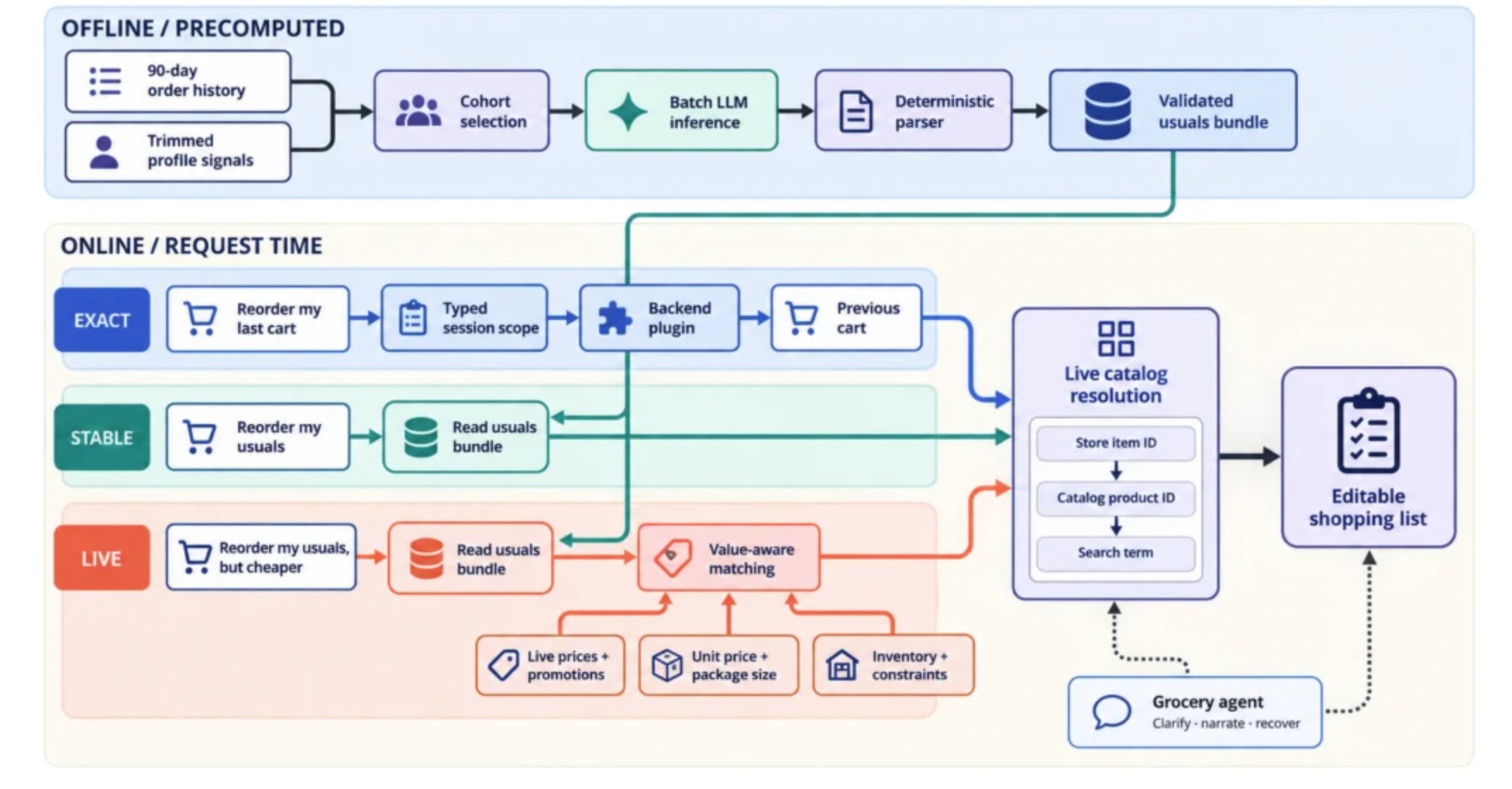
DoorDash 的杂货商品重新下单架构(来源:DoorDash 博客文章)DoorDash’s grocery reorder architecture (Source: DoorDash Blog Post)
服务路径会检索这些已准备好的数据,并将每个条目与当前目录进行匹配。它会先尝试匹配原始商店商品,然后匹配目录中的产品标识符,最后匹配搜索词。这样一来,即使商品列表发生变化或商品缺货,系统也无需在每次请求时重复进行历史推理,就能适应这些情况。The serving path retrieves this prepared data and resolves each item against the current catalog. It first tries to match the original store item, then a catalog product identifier, and finally a search term. This allows the system to accommodate changing listings and unavailable products without repeating historical reasoning for every request.
共享平台提供编排、记忆、模型访问、追踪、评估基础设施和灰度发布控制。领域团队仍负责管理智能体指令、技能、工具和评估标准。DoorDash 表示,新增其 Reservations 智能体仅用了一周,比构建最初的领域智能体快了约十倍。The shared platform provides orchestration, memory, model access, tracing, evaluation infrastructure, and rollout controls. Domain teams retain ownership of agent instructions, skills, tools, and evaluation criteria. DoorDash reports that adding its Reservations agent took one week, approximately ten times faster than building its initial domain agents.
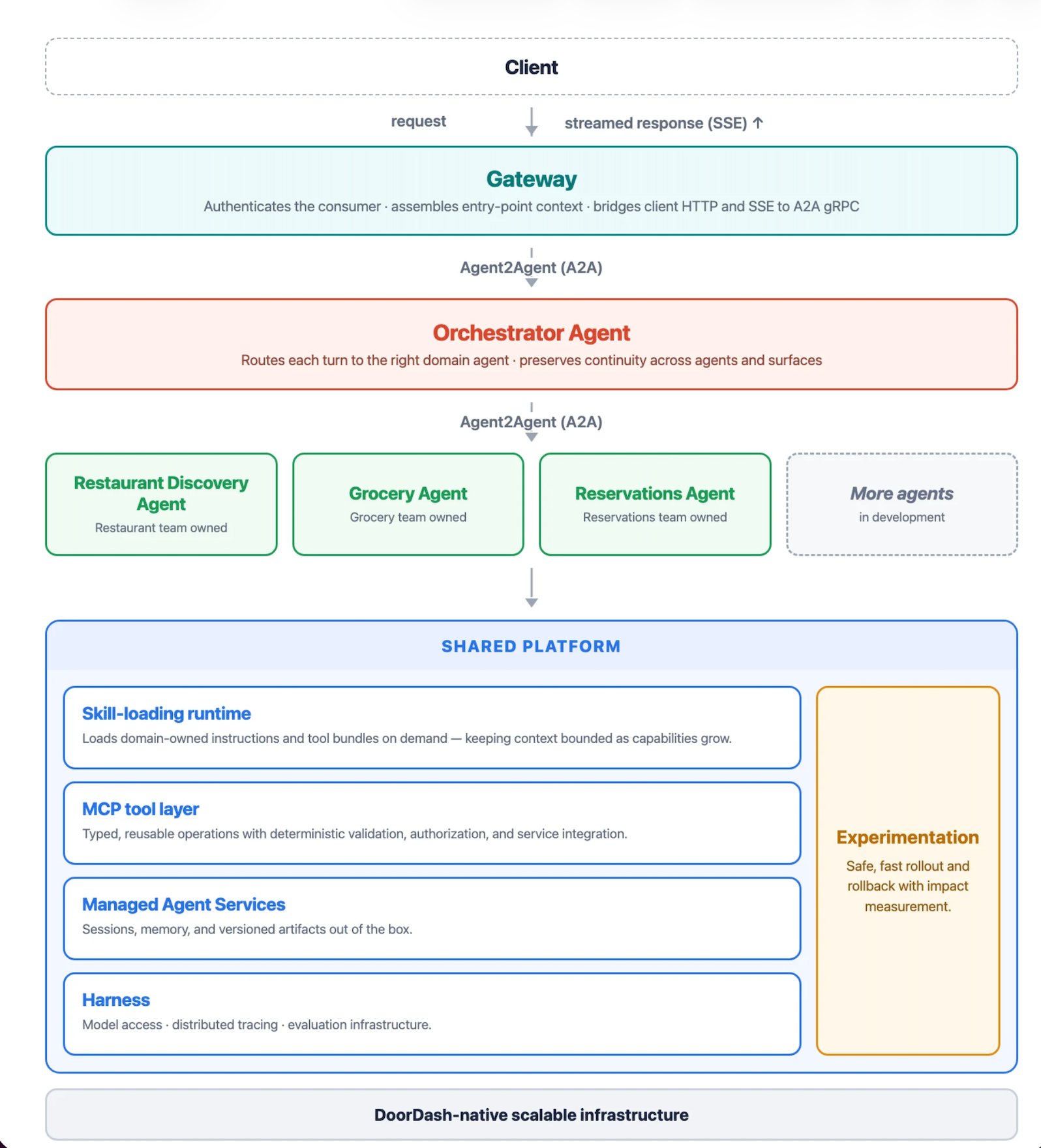
了解 DoorDash 的共享智能体平台架构(来源:DoorDash 博客文章)Ask DoorDash shared agent platform architecture (Source: DoorDash Blog Post)
DoorDash 工程师 Twisha Jain 在一篇 LinkedIn 帖子中阐述了设计思路:Twisha Jain, a DoorDash engineer, described the design rationale in a LinkedIn post:
更好的智能体系统并不总是意味着进行更多推理,而是要决定哪些工作应放在智能体循环中,哪些可以提前完成。Better agentic systems aren’t always about more reasoning; they’re about deciding what belongs in the agent loop and what can happen ahead of time.
将周期性采购分析移至离线处理,可减少实时请求期间所需的工作,同时保留最新的商品目录信息以供选择。对于需要进一步推理的请求,例如根据当前价格、促销活动、包装规格、库存和消费者偏好寻找更便宜的替代品,系统仍会调用 Grocery 智能体。更简单的操作(包括修改数量或移除商品)则会直接更新购物清单,无需再次调用 LLM。Moving recurring purchase analysis offline reduces the work required during a live request while retaining current catalog information for product selection. The system still invokes the Grocery agent for requests requiring additional reasoning, such as finding cheaper alternatives based on current prices, promotions, package sizes, inventory, and consumer preferences. Simpler operations, including changing quantities or removing products, update the shopping list directly without another LLM round trip.
一篇 DoorDash 工程博客关于其购物界面的文章指出:A DoorDash engineering post about its shopping interface states:
消费者的直接编辑具有权威性:下一个代理轮次以编辑后的列表为准,而不是以之前所说的内容为准。A consumer’s direct edit is authoritative: the next agent turn starts from the edited list, not from what was said earlier.
该设计将购物清单视为消费者和智能体都可以更新的结构化对象,而不是仅依赖对话历史。其他杂货购物平台也利用 AI 实现个性化购物。Instacart 的 AI 购物助手会根据消费者偏好和当地杂货商品,支持膳食规划、清单创建和商品发现。DoorDash 的实现则专门通过将历史购买分析与实时商品解析分开,来缩短重复下单所需的时间。The design treats the shopping list as a structured artifact that both the consumer and agent can update, rather than relying solely on conversational history. Other grocery platforms also use AI to personalize shopping. Instacart’s AI shopping assistant supports meal planning, list creation, and product discovery using consumer preferences and local grocery offerings. DoorDash’s implementation focuses specifically on reducing reorder latency by separating historical purchase analysis from live product resolution.