
我让 AI 查找 400 年的历史档案。它发现了一颗被遗忘的陨石、失踪的犀牛和未记录的火山爆发。
原题I Pointed AI at 400 Years of Historical Archives. It Found a Forgotten Meteorite, Lost Rhinos, and Unrecorded Volcanic Eruptions.
推荐理由Jesse Waites 用 AI 检索荷兰东印度公司档案与旧报纸,筛出陨石、犀牛和火山的历史线索,并将结果回溯到原始扫描与档案编号,展示多模型检索如何配合人工核验。
读前速览
使用 AI 分析数百万份数字化历史记录,我发现了 1812 年一颗此前未被记录的陨石、1740 年代三只爪哇犀牛被送往斯里兰卡的记录,以及三起未出现在史密森全球数据库中的火山喷发。
发现了一颗被遗忘的陨石
对《爪哇政府公报》的搜索发现了一封 1812 年的信,描述了一块在马哈拉施特拉邦 Cokurrgaum 附近坠落的陨石。这块富含铁且带有黑色外壳的石头并未出现在任何主要陨石目录中,因此是历史上新发现的天体撞击事件。
失败的犀牛远征
档案记录了一次试图将爪哇犀牛运往斯里兰卡坎迪国王的失败尝试。三只犀牛被捕捉,但都在途中死亡,其中一对是在 1740 年的船只 Loverendaal 上丧生。这些记录为爪哇犀牛的历史分布和圈养情况提供了新的数据。
未记录的火山喷发
通过将公司信件与史密森全球火山计划数据库进行交叉比对,我发现了三起并未列入其中火山喷发:1722 年的 Gamkonora、1712 年的 Ciremai 和 1780 年的 Slamet。这些事件由公司官员目击,让我们更加全面地理解该地区的火山活动。
完整摘要
这个项目展示了 AI 辅助历史研究的强大能力,成功从荷兰东印度公司档案和 19 世纪早期的报纸中挖掘出了遗失的事件。研究揭示了一起发生在马哈拉施特拉邦的陨石撞击、三只作为王室礼物被运输的犀牛的命运,以及印度尼西亚的三次火山活动,这些都曾缺失于标准参考目录中。
目录 · 7 节
我如何利用 AI 调查数百万条历史记录,并发现一份被遗忘的陨石报告、三头失踪的犀牛,以及未被记录的火山喷发。How I used AI to investigate millions of historical records and surfaced a forgotten meteorite report, three lost rhinos, and unrecorded volcano eruptions.
上周,也就是 2026 年 10 月 1 日,历史学家本杰明·布林发表了一篇题为《使用 Opus 5.5 发现一份关于渡渡鸟的新目击者记述》的文章。他利用人工智能搜索荷兰东印度公司的数字化档案。该公司主导了香料贸易,并从 1602 年起在亚洲各地经营着一系列港口,直到因债台高筑而于 1799 年解散。Last week, on October 1st, 2026, the historian Benjamin Breen published a post called Using Opus 5.5 to discover a new eyewitness account of the dodo. He used AI to search digitized records from the Dutch East India Company. The Company dominated the spice trade and ran a string of ports across Asia from 1602 until it collapsed under its debts and was dissolved in 1799.
一个名为 GLOBALISE 的项目将这家公司的数百万页手写档案转化成了可检索文本。布林利用 AI 搜索这些转录文本时,发现了一份 1615 年的船舶日志,其中记载,毛里求斯的水手“捕获了许多陆龟和渡渡鸟”。一份关于已灭绝渡渡鸟的全新目击记录,就这样明明白白地隐藏了四百年。A project called GLOBALISE has turned millions of the Company’s handwritten pages into searchable text. Searching those transcriptions with AI, Breen found a 1615 ship’s journal in which sailors on Mauritius “caught many tortoises, dodos”. A new eyewitness record of the extinct dodo, sitting in plain sight for four hundred years.
我读完这篇文章,立刻就想:我也能做到。I read the article and immediately thought, I can do this.
并不是因为我是一名历史学家,而是因为我是一名软件工程师,恰好很擅长操控 AI 智能体和构建智能体工作流。Breen 的帖子给了我灵感,我想进一步拓展这种方法:我可以并行搜索许多不同的历史谜团,还可以串联几个不同的 AI 模型来筛选结果,并自动完成一些繁琐又耗时的手动步骤。Not because I’m a historian, but because I’m a software engineer who happens to be very adept at piloting AI agents and creating agentic workflows. Breen’s post was the inspiration, and I wanted to extend the approach: I could search for many different historical mysteries in parallel, and I could chain together a few different AI models to filter results and automate a few of the cumbersome, time consuming manual steps.
但这种吸引力不止来自技术挑战。我觉得,为人类的知识添砖加瓦是一件值得敬重的事。哪怕只是给几个小众领域增添一个新的数据点,也让我觉得这是一份虽小却有价值的贡献。我觉得,如果自己能做到这一点,那会很酷。But the appeal went beyond the technical challenge. I think there’s something honorable about adding to what we know. Adding even one new data point to a couple of niche fields felt like a small but worthwhile contribution to make. I thought it would be really cool if I could do that.
我启动了家里小巧但功能强大的 AI 实验室,开始工作。I powered on my small but capable home AI lab and got to work.
目录Table of Contents
- 计划
- 陨石
- 犀牛
- 被遗忘的喷发
- 未奏效之处
- 报纸奇闻
- 目前的情况
- 来源
计划The Plan
我首先向一款 AI“深度研究”助手提了个问题:哪些尚待解答的历史问题,最有可能用网上已有的数据解决?它列出了十三个候选问题,并根据数据的完整程度和可获取性、AI 能发挥多大作用、是否已有其他人研究过,以及最重要的一点——答案能否通过原始文献核实——对它们进行了排序。最后这一点的重要性,远比听起来要大。AI 模型可能会信誓旦旦地出错,因此每一项论断都必须能追溯到真实文献:实际的手写信件扫描件,或实际出版的报纸扫描件,并附上任何人都能查阅、亲自阅读的档案编号。清单上的问题包括荷兰东印度公司档案中的动物、发生于 1808 年且至今无人找到遗址的一场巨大火山喷发、旧荷兰报纸中记载的有感地震、没有记录在案的陨石坠落,以及彻底消失的船只。I started by asking an AI “Deep Research” assistant a question: which open historical questions are most likely to be solvable with data that already exists online? It came back with thirteen candidates, ranked by how complete and accessible the data was, how much AI could help, whether anyone had already done it, and, most importantly, whether an answer could be checked against an original page. That last one matters more than it sounds. AI models can be confidently wrong, so every claim had to end at a real document: a scan of the actual handwritten letter or the actual printed newspaper, with an archive reference that anyone can look up and read for themselves. The list included animals in the Dutch East India Company archives, a giant volcanic eruption from 1808 that nobody has ever located, felt earthquakes in old Dutch newspapers, unrecorded meteorite falls, and ships that completely vanished.
然后,我与 Anthropic 的 AI 工具 Claude Code 合作,共同设计出了这套研究流程。Then I teamed up with Claude Code, Anthropic’s AI tool, and we invented this research pipeline together.
首先是阅读材料:GLOBALISE 对荷兰东印度公司档案的转录文本(共 435 万页,时间跨度从 17 世纪到 1790 年代)、荷兰国家图书馆的数字化报纸、两百年来的美国报纸,此外还添上了几本船舶航海日志。First came the reading material: the GLOBALISE transcriptions of the Dutch East India Company archive (4.35 million pages, from the 1600s to the 1790s), the Dutch national library’s digitized newspapers, two centuries of American newspapers, and a few ship logbooks for good measure.
如果我亲自坐下来只读荷兰东印度公司的页面,按每页两分钟、每天八小时、每周五天来算,大约需要70年。这还没算报纸。我自制的 AI 实验室一夜运行十二个小时,就读完了整个档案。If I sat down to read just the Dutch East India Company pages myself, at two minutes a page, eight hours a day, five days a week, it would take me about 70 years. And that’s before the newspapers. My homebrew AI lab got through the entire archive in a single twelve-hour overnight run.
老文献的麻烦在于,同一个词从来没有两次拼得一样。手写文字和古老印刷品经过文本识别后,错误百出;17 世纪的荷兰语里,“犀牛”这个词大约有十五种不同拼法。普通的关键词搜索会漏掉我想找的大多数内容。那一夜的运算,是我的显卡把每一段文字都转化成代表其含义的数学指纹;仅荷兰东印度公司档案就有 570 万段文字。这样一来,我搜索的就能是某段文字讲的内容,而不只是它碰巧用了哪些词。The trouble with old documents is that nobody spelled anything the same way twice. Handwriting and old print come out of text recognition full of errors, and 17th-century Dutch spells “rhinoceros” about fifteen different ways. A plain keyword search would miss most of what I was looking for. That overnight run was my graphics card turning every passage into a mathematical fingerprint of its meaning, 5.7 million passages from the Dutch East India Company archive alone. That let me search for what a passage was about, not just which words it happened to use.
即便如此,单次搜索也可能返回数万条结果,多到一个人甚至大型 AI 模型都无法以合理成本逐条阅读。因此,第一轮筛读交给了一个名为 Jev 的小型、快速“系统一”决策模型,它只回答一些范围狭窄的问题:这是真正的动物吗?它是野生的吗?它在哪里?每百万词只需花费几美分。让它阅读 59,000 条提及大象的内容,花了我大约三美元。Even then, a single search could return tens of thousands of hits, far too many for a person, or even a big AI model, to read affordably. Instead, the first read went to a tiny, fast “System One” decision model called Jev, which answers only narrow questions: Is this a real animal? Is it wild? Where is it? It costs a few cents per million words. Having it read 59,000 mentions of elephants cost me about three dollars.
这是我在这个项目中最引以为豪的部分,而且这个想法是我提出的,不是 AI。最初我提议用 Jev 作为筛选机制时,Claude Code 的 Fable 模型还不知道什么是 System One 式决策模型;在围绕它搭建流水线之前,我得先解释这个概念。在大多数类似的研究中,瓶颈在于需要有人逐篇阅读候选材料,并判断哪些值得进一步关注。让一个成本低、速度快的评判者承担这项工作,便实现了初步筛选的自动化,让我能把精力集中在最有潜力的候选材料和调查方向上。我仔细审阅的那些页面,已经经受过两轮机器阅读。That’s the part of this project I’m proudest of, and it was my idea, not the AI’s. When I proposed using Jev as a filtering mechanism, Claude Code’s Fable model didn’t yet know what a System One type decision model was; I had to explain the idea before we could build the pipeline around it. In most research like this, the bottleneck is a person reading candidate passages one by one and deciding which are worth a closer look. Putting a cheap, fast judge in that seat automated the initial screening and freed me to focus on the strongest candidates and the direction of the investigation. The pages I examined closely had already survived two rounds of machine reading.
只有 Jev 标记的段落才进入下一步。随后,规模更大的模型 Claude Haiku 仔细阅读了这几十段文字,将它们翻译出来,并提取出日期和地点。接着,Claude Code 代理打开每一页原始手稿的扫描件,将转录内容与原件核对。在认定任何新发现之前,我都会先对照专家们自己使用的目录进行核查。Only the passages Jev flagged moved on. Claude Haiku, a bigger model, read those few dozen closely, translated them and pulled out the dates and places. Then the Claude Code agent opened the scan of each original handwritten page to check the transcription against the original. Before calling anything new, I checked it against the catalogues the specialists themselves use.
简要说明一下本项目中 AI 的使用方式:整个过程中,我始终积极参与,并全程引导 AI。我引导调查转向新的问题和资料来源,判断哪些线索值得跟进,也能察觉自己何时是在勉强寻找线索,需要及时转向别处。这些系统的搜索和阅读规模是我无法企及的,但决定下一步该往哪里走,或何时该停下,仍然需要依靠我的判断。这是 AI 辅助的研究,而非完全自主的调查。A quick note on how AI was used in this project: I stayed actively involved in the process throughout and piloted the AI through the course of the entire project. I steered the investigation toward new questions and sources, decided which leads were worth pursuing, and recognized when I was grasping at straws and needed to move on. The systems could search and read at a scale I couldn’t, but deciding where to go next, or when to stop, still took my judgment. This was AI-assisted research, not a completely autonomous investigation.
还有一条规则,而且最重要。在相信一次一无所获的搜索之前,你必须先证明它能找到一个你已知确实存在的东西。所以,在开始寻找任何新内容之前,流水线必须先找到布林的渡渡鸟、1783年的拉基火山喷发、1815年的坦博拉火山喷发,以及其他十几件已知事件。There was one more rule, and it mattered most. Before you trust a search that finds nothing, you have to prove it can find something you already know is there. So before I went looking for anything new, the pipeline had to find Breen’s dodo, the Laki eruption of 1783, Tambora in 1815 and a dozen other known events.
这就像把自己的手表埋在前院里,来测试金属探测器一样。你知道它就在那儿。如果探测器找不到它,你就知道探测器有问题,需要先解决,然后再到别处搜寻真正的宝藏。这些已知的历史事件就是我埋下的手表:它们能用来检验这条管线是否找得到东西,然后再认真看待它什么也找不到的情况。It’s like testing a metal detector by burying your own wristwatch in the front yard. You know it’s there. If the detector can’t find it, you know you have a problem with your detector to address before sweeping elsewhere for real treasure. These known historical events were my buried wristwatch: a way to check that the pipeline could find something before taking its failures to find anything seriously.
各项检查均已通过,我开始了真正的搜索。不久之后,我自建的 AI 研究流水线开始找出一些页面:自最初撰写它们的书记员将其归档以来,或许再也无人读过;这些故事可能已有数百年不曾被人读过。The controls passed, and I began the real search. Shortly thereafter, my custom-built AI research pipeline started surfacing pages that may not have been read by anyone since the clerk who originally wrote them filed them away, stories that human eyes may not have read in hundreds of years.
被历史遗忘的陨石The Meteorite History Forgot
这个项目中的第一个真正意义上的发现,来自一个我意想不到的地方:一份于 1812 年在巴达维亚(今雅加达)印刷的报纸。巴达维亚位于爪哇岛上;爪哇是如今印度尼西亚境内的一座大岛,近两个世纪以来一直是荷兰在亚洲势力的中心。这份报纸正是在英国而非荷兰统治这座岛屿的那几年(1811—1816 年)印刷的。The first real find of the project came from somewhere I didn’t expect: a newspaper printed in Batavia (today’s Jakarta) in the year 1812. Batavia sits on Java, the large island in what is now Indonesia that was the centre of Dutch power in Asia for nearly two centuries, and the newspaper was printed there during the few years (1811–1816) when Britain, not the Netherlands, ran the island.
1812年12月19日,英文版《爪哇政府公报》转载了8月26日《孟买公报》刊登的一封信。一名驻扎在潘达尔普尔附近(今马哈拉施特拉邦)的英军军官写信回家:On 19 December 1812 the English-language Java Government Gazette reprinted a letter from the Bombay Gazette of 26 August. An officer with a British force camped near Pandharpur, in what is now Maharashtra, wrote home:
M——船长手头有一件奇物,即三天前(8月6日)在科库尔冈村附近从雷云中坠落的一块石头。我想它至少有四磅重,按其体积来说十分沉重,含铁量很高,表面覆着一层薄薄的黑色外壳,仿佛火药曾在它周围爆炸过。“Captain M— is in possession of a great curiosity viz. a stone precipitated from a Thunder-cloud near the village of Cokurrgaum three days ago (the 6th August). It weighs I should think four pounds at least, is very heavy for its size, being greatly impregnated with iron, and coated with a thin black crust, as if Gunpowder had exploded around it.”
雷声听起来“像一阵火枪齐射般的沙沙声,持续了约半分钟”。那块石头深深陷入空地一英尺。后来人们“费了些周折”才把它取回,因为帕特尔(村长)认定这块石头是天造之物,便决定定期向它祷告。The thunder was heard “like a rustling fire of Musquetry for about half a minute.” The stone had buried itself a foot deep in open ground. And it was recovered “with some difficulty, as the Pattell [the village headman], conceiving the stone of Heavenly fabrication, had determined to say his prayers to it, with due regularity.”
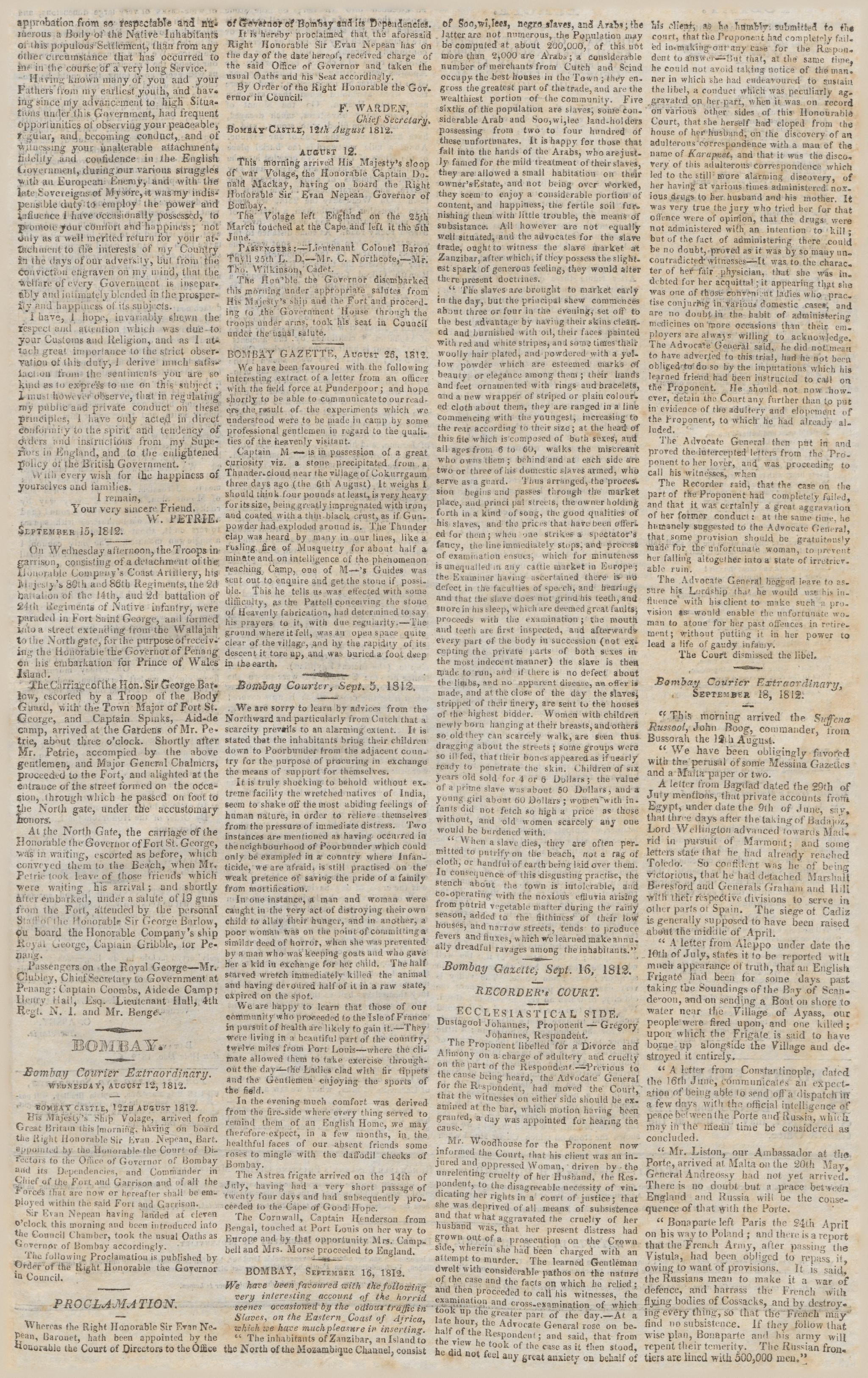
轰鸣声、一块沉重的富铁石头、一层薄薄的黑色熔壳、田野里的陨坑:这就是教科书式的陨石坠落案例。而它并未收录在任何目录中。我查阅了六份目录,从 Chladni 于 1819 年编制的开创性名录,到大英博物馆的目录、《1933 年印度陨石名录》,再到如今的《陨石学通报》。我还用 AI 搜索了 1812 至 1817 年间的一百种数字化期刊,想寻找后续报道,但一无所获。这块石头也不在自然历史博物馆的藏品中。Booming, a heavy iron-rich stone, a thin black crust, a crater in a field: that’s a textbook meteorite fall. And it isn’t in any catalogue. I checked six of them, from Chladni’s pioneering list of 1819 through the British Museum’s catalogues and the 1933 List of Indian Meteorites to today’s Meteoritical Bulletin. I used AI to search a hundred digitized periodicals from 1812–1817 for a follow-up, but found none. The stone isn’t in the Natural History Museum’s collection either.
一旦得到确认,我发现的这次陨石坠落事件将成为马哈拉施特拉邦有记录以来最早的一次,比目前最早的记录早26年。Once confirmed, this meteorite fall I uncovered will represent the earliest recorded meteorite fall in Maharashtra, predating the current earliest record by 26 years.
我很喜欢这条链条的脆弱。德干高原上落下一块石头。一名军官写了一封信。孟买的一家报纸刊登了它。一艘船把报纸运到爪哇——那里恰好在五年间归英国统治——当地一位编辑正需要填满一个版面。副本最终进入了一座荷兰图书馆,图书馆将它们数字化并免费发布。两个世纪后,我办公室里的一块 GPU 又发现了它。只要其中任何一环缺失,这块陨石就会永远从历史中消失。I love how fragile the chain is. A stone falls in the Deccan. An officer writes a letter. A Bombay paper prints it. A ship carries the paper to Java, which happens to be British for five years, where an editor needs to fill a column. Copies end up in a Dutch library, which digitizes them and releases them for free. Two centuries later a GPU in my office rediscovers it. Take away any one of those links and the meteorite is forever vanished from history.
从未抵达国王面前的犀牛The Rhinos That Never Reached the King
1738年,在巴达维亚(今雅加达)城外的某片森林里,荷兰东印度公司的雇员捕获了一头活的爪哇犀牛。它是准备送人的礼物。公司每年都会派使团携带礼品前往康提王国的国王那里;这个王国位于斯里兰卡高地,国王的善意能让肉桂源源不断地流通。因此,巴达维亚当年寄往荷兰的信中,在列举送给国王的珍奇礼物时写道:“又一头在此地森林中捕获,并同样运送过去的犀牛。”In 1738, somewhere in the forests outside Batavia (today’s Jakarta), men working for the Dutch East India Company caught a live Javan rhinoceros. It was meant as a present. Every year the Company sent an embassy with gifts to the King of Kandy, the ruler of Sri Lanka’s highland kingdom, whose goodwill kept the cinnamon flowing. The king loved large, impressive animals. So Batavia’s letter to the Netherlands that year lists, among the rarities sent to the king, “yet another rhinoceros which one has had caught here in the forests, and likewise sent over.”
这头犀牛横渡印度洋,抵达了科伦坡。它却没能翻越群山抵达康提。在公司的账目中,“De Paardenstal”(“马厩”)这一标题下,有一笔于1740年注销的记录:The rhino made it across the Indian Ocean to Colombo. It never made it up the mountains to Kandy. In the Company’s accounts, under the heading De Paardenstal, “the horse stable”, there is a line written off in 1740:
一头矮小的犀牛,1738年死在马厩里。“1 rhinoceros short, died in the horse stable in the year 1738.”
1739年3月,科伦坡总督有些难为情地写信给巴达维亚,称那头犀牛“突然就死了”。为了弥补此事,他在送给国王的礼物中添了一匹上好的波斯乘马,“以满足国王屡次表露的对这类高大健壮骏马的热切渴望。”In March 1739 the governor in Colombo wrote to Batavia, a little sheepishly, that the rhinoceros “died very suddenly”. To make up for it, he had added a fine Persian riding horse to the king’s gifts, “to please the King’s so often shown fiery desire for such large and stout horses.”
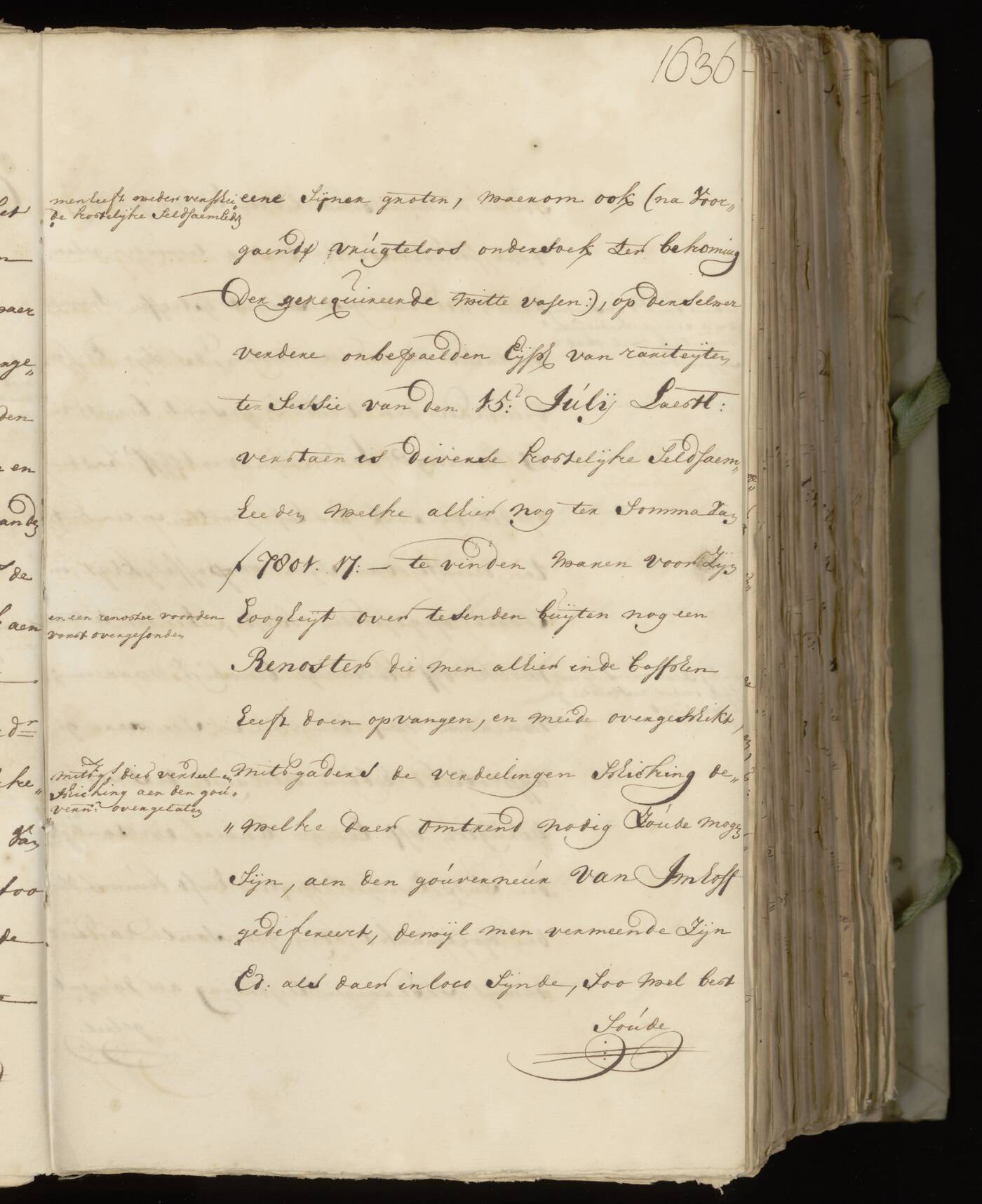
巴达维亚再次尝试。1740年7月5日,洛文达尔号从巴达维亚启航前往锡兰,船上载着两头犀牛,一公一母。启航三天后,船上的军官、水手长和炮手在账房面前集体宣誓作证:尽管他们“竭尽心力”想让这两头犀牛活下来,雄犀牛还是在当天早晨“约八点钟”死了。十天后,他们又宣誓作证。剩下的那头——雌犀牛,‘t wijfje——也死了。Batavia tried again. On 5 July 1740 the ship Loverendaal sailed from Batavia for Ceylon with two rhinoceroses aboard, a male and a female. Three days out, the officers, boatswain and gunner gathered before the ship’s bookkeeper and swore a statement: despite “all trouble and diligence” to keep the two rhinoceroses alive, the male had died that morning, “at about eight o’clock.” Ten days later they swore a second statement. The last of the two, the female, ‘t wijfje, had died too.
船员们的陈述在科伦坡法庭上向他们宣读后,他们“坚持原说,不愿作丝毫改动”。随后,总督不得不把消息告知康提。他于1740年9月16日写给驻国王宫廷使节的指示,读来几乎令人动容。他为国王找到几头荷兰来的猪,“一头公猪和两头母猪,都是还很年轻的猪,肯定会长大不少,尤其是那头小公猪。”若能弄到狗,他也很乐意满足国王的请求。使节还应让宫廷官员知道,“以便他们若被问起时可以作答”:从巴达维亚乘“洛弗伦达尔”号送来的两头犀牛都在航程中死了,“这尤其令我们遗憾”。The crew’s statements were read back to them before the court in Colombo, and they “persisted in them without wishing the least change.” Then the governor had to tell Kandy. His instructions to the envoys at the king’s court, dated 16 September 1740, are almost touching. He had found the king some Dutch pigs, “a boar and two sows, all still young animals that will surely grow considerably, especially the little boar.” He would gladly have met the king’s request for dogs, had any been obtainable. And the envoys should let the court officials know, “so that they can answer if asked”, that the two rhinoceroses sent from Batavia on the Loverendaal had both died on the voyage, “to our particular regret.”
看来,国王一直在等他们。The king, it seems, had been expecting them.
三年后,荷兰使节在印度南部拉姆纳德宫廷受到一项要求,对方的语气令他们觉得冒犯:安排“送来一头小犀牛,就像送给康提国王的那头一样”。那份始终未能送达的礼物,已成了其他统治者也想得到的东西。Three years later, Dutch envoys at the court of Ramnad in southern India were asked, in a tone they found impertinent, to arrange for “a young rhinoceros to be sent, as was done for the King of Kandy.” The gift that never arrived had become something other rulers wanted.
如今,爪哇犀牛仅存于爪哇最西端的乌戎库隆国家公园。因此,这些信件不仅仅讲述了一次未能实现的当下。关于圈养爪哇犀牛的历史记录少得惊人,总共只有几十只;而这些文件又增添了三只,并记录了日期、一艘有名有姓的船只、宣誓证词,以及一只犀牛抵达科伦坡的经过。在我查阅的目录中,没有找到这些运往斯里兰卡的记录。接下来需要确认的是,这三只是否都未曾见于专业文献。Today the Javan rhinoceros survives only in Ujung Kulon National Park, at the far western tip of Java. That makes these letters more than a story about a failed present. The historical record of Javan rhinos in captivity is exceptionally small, a few dozen animals in total, and these documents add three of them, with dates, a named ship, sworn testimony and an account of one animal reaching Colombo. In the catalogue I checked, I found no record of these shipments to Sri Lanka. Whether all three are new to the specialist literature is the next thing to establish.
故事背后还有一片风景。短短两年间,公司便从自家首府周边的森林中捕获了三头活犀牛;这些地方远在该物种残存栖息地之外。1772年,官员们骑马穿行于万丹高地,发现了“犀牛走出来的小径;这里犀牛数量众多。我一头也没见着,却闻到了它们的气味;从马的反应也能准确辨认出来:每当马闻到那股气味,就会受惊、跳跃,还会蹦蹦跳跳地乱窜。”如今读来,这仿佛让人瞥见了一片很快就将消失的栖息地。There is also the landscape behind the story. In just two years, the Company obtained three live rhinos from the forests around its own capital, far beyond the species’ surviving refuge. In 1772, officials riding through the Bantam highlands found paths “made by the rhinoceroses, which are found here in great numbers. I saw none, but did smell them, which one can also tell perfectly from the horses: every time one comes into the scent, the horses shy, jump and make capers.” Today it reads like a glimpse of the habitat that would soon be gone.
荷兰东印度公司的官员热衷于写信,而他们生活在地球上最活跃的一些火山旁边。于是我向档案馆提出了一个简单的问题:公司雇员亲眼目睹过哪些喷发,却没有被收录在世界通用的火山名录——史密森尼学会的全球火山活动计划中?The Dutch East India Company’s officials were obsessive letter-writers, and they were living next to some of the most active volcanoes on the planet. So I asked the archive a simple question: which eruptions did Company employees witness that the world’s standard volcano list, the Smithsonian’s Global Volcanism Program, doesn’t have?
我的 AI 系统在语料库中找到了 769 份喷发报告。AI 对喷发火山的猜测往往不准确(它曾把爪哇的一次火山灰降落归咎于 1,500 公里外的一座火山),因此每个候选地点都必须依据信件本身提供的地理信息加以定位,再与已知的喷发列表进行交叉核对。最终筛选出三个:My AI systems found 769 eruption reports in the corpus. The AI’s guesses about which volcano were often wrong (it blamed one Java ash fall on a volcano 1,500 kilometres away), so every candidate had to be placed using the letter’s own geography, then cross referenced against the known eruption lists. Three survived:
- 哈马黑拉岛的加姆科诺拉,1722年2月3日。特尔纳特总督报告称,海峡对岸的山脉上空“云后有一道大火光,夹杂着闪电,伴随着巨大的轰鸣声”。第二天早晨,特尔纳特的街道、屋顶和树木都落满了火山灰,“仿佛盖上了一层白布”;“天空变得昏暗,整整一天都看不见太阳”。这座山位于“加马科诺拉和萨胡之间”:它就是加姆科诺拉,有记录的喷发年份仅有1564年和1673年。军士兼制图师雅各布·恩格斯乘船前往察看,发现整片山坡上的树木,“有几十万棵,全都被灼热的火山灰烧死”。Gamkonora, Halmahera, 3 February 1722. The governor of Ternate reported “a great fire behind a cloud, mixed with lightning, with a great roar” over the mountains across the strait. The next morning, Ternate’s streets, roofs and trees were covered in ash “as with a white cloth”, and “the air darkened so that one could not see the sun the whole day.” The mountain was “between Gammaknorra and Sahu”: Gamkonora, whose only listed eruptions are 1564 and 1673. A sergeant-cartographer, Jacob Engels, sailed over to inspect and found the trees on whole hillsides, “several hundred thousand, all dead by the glowing ash.”
- 1712年初,西爪哇的塞雷迈山。数周来,火山灰与烟雾弥漫,“看不到明火”,“整个东南部地区都覆盖着一层薄薄的蓝灰色火山灰”;庄稼毁坏,牲畜不肯吃覆满火山灰的草。当地王公说,以前也发生过同样的事。Ciremai, West Java, early 1712. Weeks of ash and smoke “without visible flames”, “the whole south-eastern country covered with a thin bluish ash”, crops ruined, cattle refusing the ash-covered grass. The local princes said the same had happened before.
- 萨拉梅特山,中爪哇,1780年2月。“特加尔那座曾经喷火的山”,燃烧得“如此猛烈,是这里无人记得曾有过的情形。”Slamet, Central Java, February 1780. “The formerly burning mountain of Tegal”, burning “so strongly as no one here remembers.”
为了验证一下,同一次搜索还找到了桑义赫群岛阿乌火山于1711年的喷发,这场喷发造成138人死亡。史密森尼的记录精确到了具体日期。荷兰东印度公司的说法则来自一封村校校长写的信。As a sanity check, the same search found the 1711 eruption of Awu in the Sangihe islands, which killed 138 people. The Smithsonian has it, to the day. The Dutch East India Company’s version comes from a letter by the village schoolmaster.
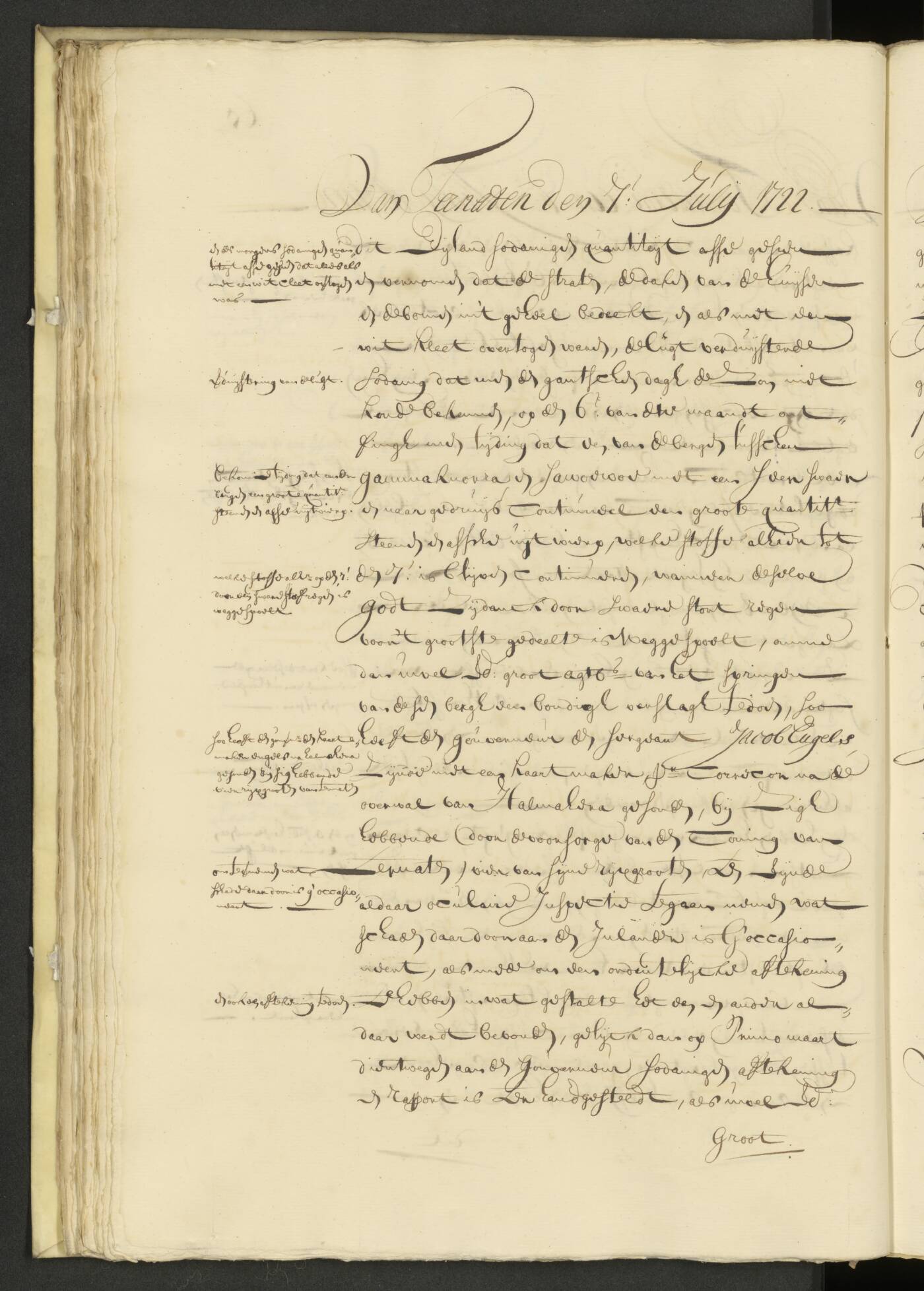
一旦得到证实,这将意味着历史记录中新增三次火山喷发——它们当时曾有人亲眼目睹并记录下来,却在史密森学会的名录中缺席了三个世纪。Once confirmed, these will represent three new volcanic eruptions added to the historical record, witnessed and written down at the time but absent from the Smithsonian’s list for three centuries.
哪些方法行不通What Didn’t Work
说到火山,我试图用 AI 解开的第一个谜团——1808/09 年那场大规模的“未知”喷发——以失败告终。冰芯记录显示,它是过去 500 年来规模最大的喷发之一,却没人知道它发生在哪里。我查阅了美国报纸、荷兰报纸、船舶航海日志、南美洲的殖民地报刊、巴达维亚的第一份报纸(共 633 篇文章,全部通读),以及印度的新闻摘要。毫无收获。同一套流程也找出了我拿来测试的其他所有喷发相关报道,所以我相当确信,这些地方根本没有留下相关记载:似乎没有人写下 1809 年天空出现异象的事。我目前最有希望的线索,是 1,235 本东印度公司航海日志中那些尚未转录的手写批注。这就留待改日再做吧。Speaking of volcanoes, the first mystery I attempted to solve with AI, the great “Unknown” eruption of 1808/09, was a bust. Ice core records indicate that it was one of the largest eruptions of the last 500 years, and nobody knows where it happened. I searched American newspapers, Dutch newspapers, ship logbooks, the colonial press of South America, Batavia’s first newspaper (all 633 articles, read in full) and India’s news digests. Nothing. The same pipeline picked up every other eruption I tested it on, so I’m fairly confident the reports just aren’t there: nobody in those places seems to have written about a strange sky in 1809. My best remaining lead is the handwritten remarks in 1,235 East India Company logbooks that have never been transcribed. That’s a project for another day.
报纸上的几则奇闻A Few Oddities from the Newspapers
在进行主要搜索的同时,我还让它搜索了天空中看到的奇异事物。460 份报告中,大多数都有寻常的解释,比如流星、幻日和彗星。有几则故事实在太精彩,不忍删去。(我还没有对照原始页面核实这些内容,所以请把它们当作故事,而非研究发现。)While the main search ran, I also asked it to conduct a search on strange things seen in the sky. Most of the 460 reports had ordinary explanations, like meteors, mock suns, and comets. A few were too good to leave out. (I haven’t checked these against the original pages, so treat them as stories, not findings.)
- 1781年9月23日,荷兰海岸附近出现了一名“空中骑士”。一位名叫 Booy Lourens 的船长报告说,在弗里斯兰群岛外海约六英里处,天空中出现了一名骑士,即 Luchtruiter。同一天晚上,海上发现了一支英国舰队,哈尔德韦克镇发生地震,北极光也耀眼地闪烁起来。我最倾向的猜测是:一支处于战时、神经紧绷的船员队伍看到了极光。An “aerial horseman” off the Dutch coast, 23 September 1781. A skipper named Booy Lourens reported a Luchtruiter, a horseman in the sky, about six miles off the Frisian islands. That same evening an English war fleet was sighted offshore, an earthquake shook the town of Harderwijk, and the northern lights blazed. My best guess is an aurora seen by a nervous crew in wartime.
- 北卡罗来纳州烟囱岩的幽灵人群,1806年。目击者描述称:“闪闪发亮的白色人形……大小不一,从成人到婴儿都有,成群结队地绕着一块巨岩移动。”这个故事曾在全国各地转载,如今仍作为当地民间传说流传。Phantom crowds at Chimney Rock, North Carolina, 1806. Witnesses described “glittering white appearances of human kind… of all sizes from men to infants, moving in throngs round a large rock.” The story was reprinted across the country and lives on as local folklore.
- 一块落在船甲板上的石头,1812年1月25日。一名船上的军官报告说,有石头落在船周围,其中一块落到了甲板上:“重量超过六盎司,呈铁色。”我查阅的陨石目录中都没有收录它。A stone that fell onto a ship’s deck, 25 January 1812. A ship’s officer reported stones falling around his ship, one landing on deck: “more than six ounces, iron-coloured.” It isn’t in the meteorite catalogues I checked.
- 1816年,波恩附近一块重达一百磅的“陨石”。一份荷兰报纸报道称,花园里有石头从天而降,其中一块重100磅。没有相关坠落记录,因此它要么是一块失佚的陨石,要么只是个夸张的故事。A hundred-pound “aerolite” near Bonn, 1816. A Dutch paper reported stones falling from the clouds in a garden, one weighing 100 pounds. No such fall is on record, so it’s either a lost meteorite or a tall tale.
- 月亮周围出现黑色和血红色的光环,瑞典,1802—1803年冬。一场壮观的晕象,得到了极为详尽的描述。Black and blood-red rings around the Moon, Sweden, winter 1802–03. A spectacular halo display, described in great detail.
- 1812年,大马士革上空出现了一道持续三天三夜的光柱,据称是来自天堂的征兆。A pillar of light over Damascus for three days and nights, 1812, reported as a sign from heaven.
- 安大略湖海蛇,1805年,“盘绕成直径约十八英尺的螺旋状”。典型的报纸怪物。The Lake Ontario sea serpent, 1805, “coiled in spirals about eighteen feet across.” A classic newspaper monster.
目前的情况Where This Stands
主要发现目前仍只是候选项:我已对照原始页面和我能查阅的目录核实过,但尚未交由维护这些目录的专家审核。报纸中的那些奇闻则是另外一些尚未核实的线索。我已联系陨石馆藏负责人、Kees Rookmaaker 和火山学家,目前正在等待他们回复。这些检索结果让我有充分理由继续追查这些线索。专家们可以帮助确认它们是否带来了新发现。如果他们告诉我其中某些内容早已为人所知,我会更新这篇帖子,但我确信这些都是全新的重新发现。The main findings are still candidates: checked against the original pages and the catalogues I could access, but not yet reviewed by the specialists who maintain those catalogues. The newspaper oddities are separate, unchecked leads. I’ve contacted the meteorite curators, Kees Rookmaaker, and the volcanologists, and I’m waiting for their replies. The searches have given me good reasons to pursue these leads. The specialists can help establish whether they add something new. If they tell me something is already known, I’ll update this post, but I am confident these are all novel rediscoveries.
公共档案中蕴藏着大量尚未发掘的知识,着实令人震撼。短短几天里,只用一块 GPU 和一套量身定制的 AI 流程,就找到了被遗忘的陨石、三头失踪的犀牛,以及几次未被记录的火山喷发。为了让这类研究惠及更多人,我将此次调查中创建的工作流程开源,并整理成一个名为 Antiquity 的小型工具包,让任何有问题想探究、又能使用编程智能体的人,都可以开展类似的历史档案调查。The sheer volume of untapped knowledge sitting in public archives is staggering. Over just a few days, a single GPU and a tailored AI pipeline surfaced a forgotten meteorite, three lost rhinos, and several unrecorded eruptions. To make this kind of research accessible, I’m open-sourcing the workflow I created for this investigation as a small toolkit, Antiquity, enabling anyone with a question and a coding agent to conduct similar historical archival investigations.
布林和我查阅了同一份档案。他去寻找渡渡鸟,结果找到了一只渡渡鸟。我去寻找陨石和被遗忘的火山喷发,也找到了它们。那些页面一直都在那里,任何人都可以阅读。档案不会主动交出任何东西;它只会回答人们想到要提出的问题。Breen and I searched the same archive. He went looking for dodos and found a dodo. I went looking for meteorites and lost eruptions, and found those. The pages had been sitting there the whole time, for anyone to read. An archive doesn’t give anything up on its own; it only answers the questions someone thinks to ask.
如果你喜欢这篇内容,欢迎在 LinkedIn 上加我为好友,或在 X 上关注我。If you enjoyed this, feel free to add me on LinkedIn or follow me on X.
如果你愿意帮助更多人看到这篇内容,请分享它。If you'd like to help this reach more people, please share it.
为我的帖子助力:转发到 X 转发到 LinkedInBoost my posts: Repost on X Repost on LinkedIn
或者分享链接:发布到 X,分享到 LinkedIn,通过电子邮件分享,复制链接Or share the link: Post on X Share on LinkedIn Share by email Copy link
来源Sources
这篇文章中的引文摘自下列原始文献。每个链接都会打开相关原始页面的扫描件。荷兰东印度公司的档案由荷兰国家档案馆收藏(档案编号 1.04.02);本文检索的转录文本由 GLOBALISE 项目制作。报纸资料来自 Delpher,即荷兰国家图书馆的档案库。The quotes in this post come from the original documents below. Each link opens a scan of the actual page. The Dutch East India Company papers are held by the National Archives of the Netherlands (archive 1.04.02); the transcriptions searched were made by the GLOBALISE project. The newspapers are from Delpher, the Dutch national library’s archive.
这块陨石The meteorite
- 《爪哇政府公报》,1812年12月19日,第3页,转载自1812年8月26日的《孟买公报》:DelpherThe Java Government Gazette, 19 December 1812, p. 3, reprinting the Bombay Gazette of 26 August 1812: Delpher
犀牛们The rhinos
- 巴达维亚一封列明送给康提国王的犀牛的1739年信件:国家档案馆,1.04.02,档案号2422,扫描件207Batavia’s letter of 1739 listing the rhinoceros sent for the King of Kandy: National Archives, 1.04.02, inv. 2422, scan 207
- 科伦坡1739年3月23日的信件:犀牛“突然死亡”,于是改派了一匹波斯马:国家档案馆,1.04.02,目录号2472,扫描件61Colombo’s letter of 23 March 1739: the rhinoceros “died very suddenly” and a Persian horse was sent instead: National Archives, 1.04.02, inv. 2472, scan 61
- 科伦坡账簿,《马厩》:“1头犀牛,死于1738年的马厩中”:国家档案馆,1.04.02,档案号2540,扫描件412Colombo’s accounts, “De Paardenstal”: “1 rhinoceros short, died in the horse stable in the year 1738”: National Archives, 1.04.02, inv. 2540, scan 412
- 1740年7月从巴达维亚启航的船只,包括5日启航的Loverendaal号:国家档案馆,1.04.02,档案号2482,扫描件113Ships leaving Batavia in July 1740, including the Loverendaal on the 5th: National Archives, 1.04.02, inv. 2482, scan 113
- 船员就“洛弗伦达尔号”上两头犀牛死亡一事所作的宣誓陈述:国家档案馆,1.04.02,档案号2540,扫描件624;另见扫描件623和625.The crew’s sworn statements on the deaths of the two rhinoceroses aboard the Loverendaal: National Archives, 1.04.02, inv. 2540, scan 624, with scans 623 and 625
- 给驻康提使节的指示,1740年9月16日(猪、狗以及犀牛的消息):国家档案馆,1.04.02,档案号2492,扫描件796Instructions to the envoys at Kandy, 16 September 1740 (the pigs, the dogs, the news of the rhinos): National Archives, 1.04.02, inv. 2492, scan 796
- 派往拉姆纳德宫廷的使节报告,1743年(“仿照为坎迪国王所做的做法”):国家档案馆,1.04.02,inv. 2599,扫描件209Report of the envoys to the court of Ramnad, 1743 (“as was done for the King of Kandy”): National Archives, 1.04.02, inv. 2599, scan 209
- 犀牛小径与受惊的马,万丹高地,1772年:国家档案馆,1.04.02,档案号3363,扫描件40The rhinoceros paths and the shying horses, Bantam highlands, 1772: National Archives, 1.04.02, inv. 3363, scan 40
- “供人们休憩和享乐的地方”,雅加达山区,1749年:国家档案馆,1.04.02,目录号2729,扫描件362“Places of rest and pleasure for people”, the Jakarta hills, 1749: National Archives, 1.04.02, inv. 2729, scan 362
- Kees Rookmaaker, The Rhinoceros in Captivity (1998)
喷发The eruptions
- 甘科诺拉,1722年2月3日:特尔纳特总督1722年7月7日的信:国家档案馆,1.04.02,目录号8090,扫描件72及扫描件71Gamkonora, 3 February 1722: the governor of Ternate’s letter of 7 July 1722: National Archives, 1.04.02, inv. 8090, scan 72, with scan 71
- 雅各布·恩格斯中士对爆发后的山体进行的检查,1722年:国家档案馆,1.04.02,清单号8090,扫描件272Sergeant Jacob Engels’ inspection of the burst mountain, 1722: National Archives, 1.04.02, inv. 8090, scan 272
- 井里汶省芝勒迈,1712年3月15日:国家档案馆,1.04.02,档案号7733,扫描件20Ciremai, Cheribon, 15 March 1712: National Archives, 1.04.02, inv. 7733, scan 20
- 斯拉梅特(“德加尔之山”),井里汶,1780年2月20日:国家档案馆,1.04.02,馆藏号7768,扫描件349及350Slamet (“the mountain of Tegal”), Cheribon, 20 February 1780: National Archives, 1.04.02, inv. 7768, scan 349, with scan 350
- 阿武,1711年12月10日(校长的信):国家档案馆,1.04.02,目录号8081,扫描件103Awu, 10 December 1711 (the schoolmaster’s letter): National Archives, 1.04.02, inv. 8081, scan 103
- 史密森学会全球火山活动计划,用于获取已知火山喷发列表。The Smithsonian’s Global Volcanism Program, for the list of known eruptions
犀牛模型The rhino model
- Rhinoceros by Poly by Google [CC-BY] via Poly Pizza