
Chainguard 推出面向 AI 编程智能体的安全 Workspaces 与 Checks
原题Chainguard Launches Secure Workspaces and Checks for AI Coding Agents
推荐理由隔离开发环境与带签名的检查结果把运行权限和验收证据连接起来。团队可据此检查智能体开发环境的凭据注入、网络出口与审计设计。
读前速览
Chainguard 发布 Workspaces 和 Checks 两款测试版产品,为 AI 编程智能体提供隔离的 microVM 环境以及带签名证明的循环内 CI,同时进入一个已有 E2B、StepSecurity、Sonatype 和 JFrog 服务的市场。
Chainguard Workspaces 将智能体和开发者的工作隔离在加固的 microVM 中,使凭证和本地服务无法被触及。
每位开发者或智能体都会获得专属的远程 microVM;`chainctl develop` 会同步工作树,包括未提交的变更,会话在断开连接时进行快照,并可通过文件、进程和 shell 上下文恢复,每个代码仓库可拥有多个隔离的 Workspace,让智能体在不共享端口、缓存或进程状态的情况下尝试不同方案。
凭证处理和出站控制被移至主机侧代理,而非客户机环境。
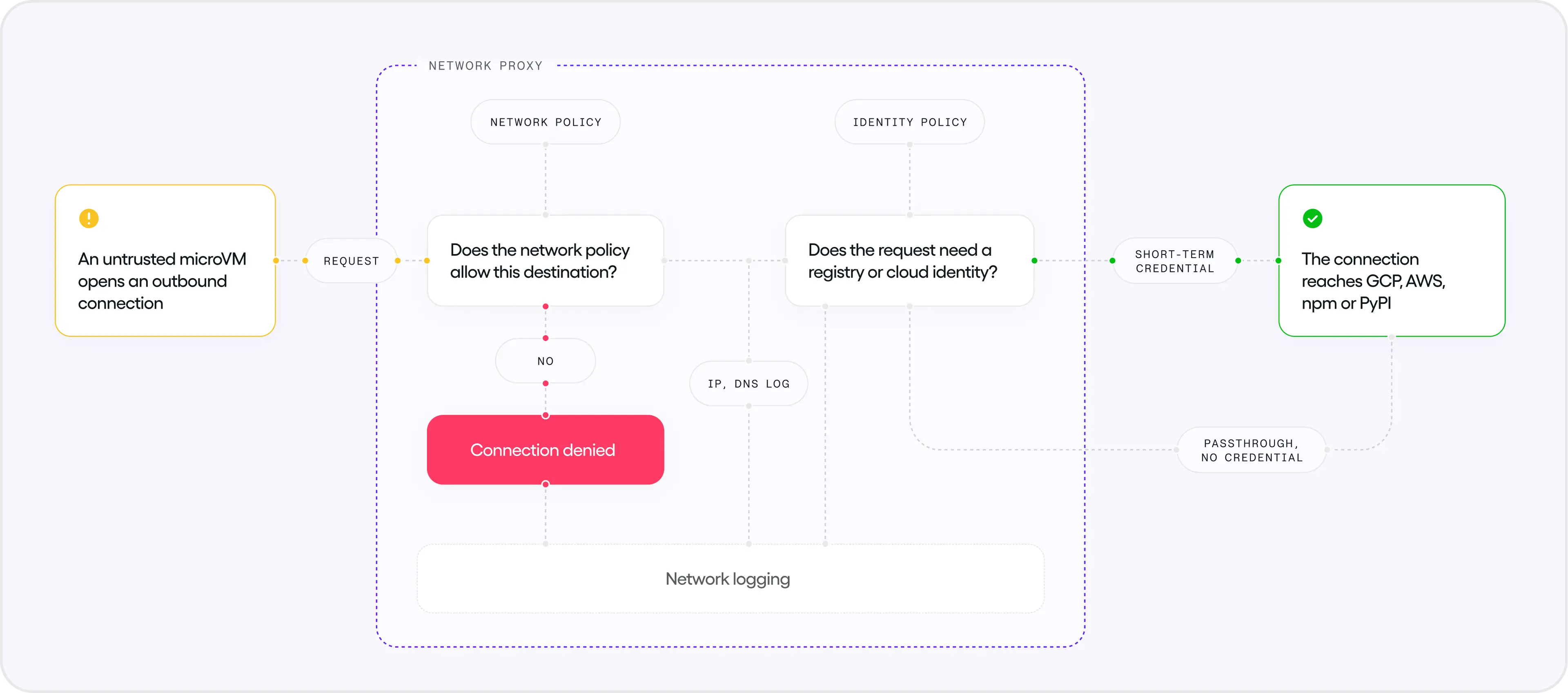
短期凭证会被添加到经批准的外发请求中,而不是将长期密钥放入客户机;可选的出站规则可以阻止并记录与团队未允许端点的连接,命令、代码变更和网络调用都会记录在防篡改日志中,旨在限制受损依赖或被提示词注入的智能体造成的损害。
Chainguard Checks 通过热 microVM 和多种调用路径将 CI 带入开发循环。
Checks 在由 Chainguard 软件包构建的独立热 microVM 中运行 CI 步骤,根据项目锁文件准备依赖,并在该文件变更时重建快照池;开发者可以通过命令行、pre-commit 钩子或 GitHub App 调用相同的检查,智能体则可通过 MCP 服务器或 SDK 调用。
将 Workspaces 和 Checks 结合使用会生成签名证明,可在合并门禁处替代重新运行测试套件。
Workspace 会在测试运行时挂起,失败的检查会将结构化日志返回给恢复后的会话,使智能体无需重建环境即可尝试另一项变更,而成功的运行会创建一份与环境、结果和提交绑定的证明;所提议的合并门禁会验证该证据,而不是再次运行测试套件。
该设计存在尚未解决的依赖问题,且市场上已有成熟替代方案。
它依赖于经证明的输入保持不变,以及代码仓库信任 Chainguard 的执行与签名系统;没有公布与成熟 CI 对比的性能数据,也没有给出验证所声称防篡改能力的指导。E2B、StepSecurity Harden-Runner、Sonatype Repository Firewall 和 JFrog Curation 已经覆盖了相邻领域,不过 Chainguard 的独特之处在于将隔离与自有软件包目录、CI 证明和智能体循环结合在一起。
完整摘要
Chainguard 在其 Assemble London 活动上发布了两款测试版产品。Chainguard Workspaces 为每位开发者或智能体提供专属的远程 microVM,通过 `chainctl develop` 同步本地工作树,在断开连接时对会话进行快照,并支持每个代码仓库拥有多个隔离环境。主机侧代理会将短期凭证注入经批准的外发请求,可选的出站规则会阻止并记录未经批准的连接,命令、代码变更和网络调用都会写入防篡改日志。Chainguard Checks 在由 Chainguard 软件包构建的热 microVM 中运行 CI 步骤,可通过 CLI、pre-commit 钩子、GitHub App、MCP 服务器或 SDK 调用。两者配合使用时,Workspace 会在测试期间挂起,失败的检查会将结构化日志返回给恢复后的会话,而成功的运行会生成一份签名证明,绑定环境、判定结果和提交 SHA,使合并门禁能够验证证据而非重新运行测试。文章指出了一些未解问题:没有公布与成熟 CI 对比的性能数据,没有关于验证防篡改能力的指导,并且依赖于对 Chainguard 执行与签名系统的信任。文章还提到 Chainguard Actions 已正式可用,包含 1,000 多个重建的 GitHub Actions,面向 Go 和 .NET 的 Libraries 进入早期访问阶段,并将该产品与 E2B、StepSecurity Harden-Runner、Sonatype Repository Firewall 和 JFrog Curation 进行了比较。
Software supply chain security company Chainguard has announced two beta products for running and testing code written by developers and AI agents. Chainguard Workspaces provides remote development environments based on hardened microVMs, while Chainguard Checks moves continuous integration into the development loop. The company announced both products at its Assemble London event.
The releases respond to a practical problem with coding agents. Agents need permission to install packages, run shell commands and edit configuration. They may also run several tasks in parallel. Doing this on a developer laptop puts corporate credentials and local services within reach of generated or third-party code. Sending each change to a conventional CI service can instead create queues and repeatedly download the same dependencies.
Workspaces gives each developer or agent a dedicated remote microVM. The chainctl develop command synchronises a local working tree, including uncommitted changes, into the environment. A session is snapshotted when the user detaches and can resume with its files, processes and shell context. Teams can also create several isolated Workspaces for one repository so agents can try different solutions without sharing ports, caches or process state.
Chainguard says that a host-side proxy adds short-lived credentials to approved outbound requests, rather than placing long-lived secrets in the guest. Optional egress rules can block and record connections to endpoints that a team has not allowed. The company also records commands, code changes and network calls in what it describes as a tamper-proof log. Paxton and Phillips say this is intended to limit damage from a compromised dependency or a prompt-injected agent.
Checks runs CI steps in separate warm microVMs built from Chainguard packages. Dependencies are prepared from the project's lockfile and the snapshot pool is rebuilt when that file changes. Developers can invoke the same checks through the command line, a pre-commit hook or the GitHub App. Agents can call them through an MCP server or SDK. Paxton and Phillips describe the aim as letting developers and agents "test, fail, and fix code safely without waiting on slow CI".
When Checks and Workspaces are used together, a Workspace suspends while tests run. A failed check returns structured logs to the resumed session, allowing the agent to try another change without reconstructing its environment. A successful run creates an attestation tied to the environment, result and commit. The proposed merge gate can verify that evidence instead of running the test suite again.
"Every run produces a signed attestation binding the environment, verdict, and commit SHA, so merge gates can verify a passing result instead of re-running tests."
Sam Katzen
This design depends on the attested inputs remaining unchanged and on repositories trusting Chainguard's execution and signing system. The announcement does not publish performance data comparing Checks with established CI services. It also does not give details of how customers should validate the claimed tamper resistance of the logs. Workspaces currently supports Claude, with other agents planned, and is priced according to consumed compute. Both products are available as 30-day beta trials.
Chainguard made two other announcements relevant to build pipelines. Chainguard Actions is now generally available, with more than 1,000 rebuilt and continuously maintained GitHub Actions. Chainguard Libraries for Go and .NET has entered early access. The Libraries service scans dependencies for malware and greyware, applies a configurable delay before new packages become available, and backports selected vulnerability fixes. Chainguard reports that its beta scanner returned verdicts on more than 5,000 Go and .NET packages, and that over 10% had no match in public sources when detected.
Chainguard is entering markets with established alternatives. E2B runs agent sessions in Firecracker microVMs, controls egress and resolves credentials outside the guest. StepSecurity Harden-Runner monitors network, file and process activity on GitHub Actions runners and can enforce outbound network policies. For dependencies, Sonatype Repository Firewall blocks or quarantines malicious and vulnerable packages before builds, while JFrog Curation applies security, licence and package-age policies at download time. Chainguard's offer combines these areas with signed test results, rebuilt actions and remediated dependencies.
The use of microVMs for untrusted build and agent workloads is already established. InfoQ's guidance on securing AI-accelerated development recommends isolated microVMs or tightly restricted containers for agent-generated code, along with short-lived credentials and default-deny network access. Amazon Bedrock AgentCore gives each user session isolated CPU, memory and filesystem resources, while Vercel's Hive build system uses Firecracker microVMs and short-lived WireGuard tunnels. Chainguard's distinction is the way it combines this isolation with its own package catalogue, CI attestations and agent loop.