
Uber 构建 MCP 网关,统一管控 800+ 服务器与 5,000+ AI 智能体工具的访问
原题Uber Builds MCP Gateway to Govern Access to 800+ Servers and 5,000+ AI Agent Tools
读前速览
Uber 构建了 MCP 网关,用于标准化 AI 智能体发现和调用内部服务的方式,解决随着智能体在公司内广泛应用而出现的集成碎片化、基础设施重复建设和安全实践不一致等问题。
Uber 构建了 MCP 网关,以标准化 AI 智能体对内部服务的发现和调用
该平台支持超过 800 个 MCP 服务器和 5,000 个工具,提供统一的发现、协议转换、授权和执行层,同时解决集成碎片化和安全实践不一致的问题。
该架构采用微服务方法,无需修改底层服务即可将现有 API 暴露为 MCP 工具
它将 MCP 注册中心(负责工具定义、模式、归属关系的控制平面)与代理网关(负责运行时执行,将 MCP 请求转换为 HTTP/gRPC/TChannel 调用)分离。
AutoCrawler 通过扫描 IDL 注册中心并生成 MCP 兼容模式,实现工具发现自动化
它使用 Cadence 从 Protocol Buffers 和 Thrift 中提取 API 定义,利用 LLM 生成工具描述,并让新工具保持禁用状态,直到团队审核并启用。
网关在服务器和工具层级执行授权,并支持 PII 脱敏
它与 Uber 内部访问控制系统集成,并为 Jira 和 Google 等集成处理第三方令牌交换。
Omni MCP 支持增量发现,以高效处理大型工具目录
智能体可以搜索服务器、发现相关工具、检索模式并按需调用工具,还支持响应投影等功能,可请求特定字段而非完整负载。
完整摘要
Uber 构建了 MCP 网关,用于标准化 AI 智能体发现和调用内部服务的方式,解决随着智能体在公司内广泛应用而出现的集成碎片化、基础设施重复建设和安全实践不一致等问题。该平台支持超过 800 个 MCP 服务器和 5,000 个工具,提供统一的发现、协议转换、授权和执行层。Uber 工程师将这一方案描述为一种微服务架构,无需修改底层服务即可将现有 API 暴露为 MCP 工具。该架构将作为控制平面的 MCP 注册中心与负责运行时执行的代理网关分离。注册中心维护工具定义、模式、归属关系和启用设置,而代理则将 MCP 请求转换为 HTTP、gRPC 或 TChannel 调用,并将响应转换回 MCP 兼容的结果。Uber 的 AutoCrawler 利用 Cadence 实现工具发现自动化,扫描内部接口定义语言注册中心,从 Protocol Buffers 和 Thrift 模式中提取 API 定义,然后生成 MCP 兼容模式,并使用大语言模型生成工具描述。新发现的工具在归属团队审核并明确启用之前保持禁用状态。配置变更会传播到数据平面,无需重启服务或重新部署。网关通过 Uber 内部访问控制系统在服务器和工具两个层级执行授权,并支持对工具响应中的个人身份信息(PII)和其他敏感数据进行脱敏处理。随着工具目录不断增长,将数千个工具的定义加载到智能体上下文中变得低效,因此 Uber 开发了 Omni MCP 以支持增量发现,允许智能体搜索服务器、发现相关工具、检索单个模式,并按需调用选定的工具。
Uber 构建了 MCP 网关,以统一 AI 智能体发现和调用内部服务的方式,从而解决随着智能体在公司内的应用不断扩大而出现的集成碎片化、基础设施重复建设以及安全实践不一致等问题。该平台支持 800 多个 MCP 服务器和 5,000 种工具,为服务发现、协议转换、授权和执行提供了通用层。Uber has built an MCP Gateway to standardize how AI agents discover and invoke internal services, addressing fragmented integrations, duplicated infrastructure, and inconsistent security practices as agent adoption expands across the company. The platform supports more than 800 MCP servers and 5,000 tools, providing a common layer for discovery, protocol translation, authorization, and execution.
Uber 工程师将这种方法描述为一种微服务架构,它将现有 API 暴露为 MCP 工具,而无需更改底层服务。该架构将充当控制平面的 MCP Registry 与负责运行时执行的 Proxy Gateway 分离开来。Registry 维护工具定义、架构、所有权和启用设置;Proxy 则将 MCP 请求转换为 HTTP、gRPC 或 TChannel 调用,并将响应转换回兼容 MCP 的结果。Uber engineers describe this approach as a microservice architecture that exposes existing APIs as MCP tools without requiring changes to the underlying services. The architecture separates the MCP Registry, which acts as the control plane, from the Proxy Gateway, which handles runtime execution. The registry maintains tool definitions, schemas, ownership, and enablement settings, while the proxy translates MCP requests into HTTP, gRPC, or TChannel calls and converts responses back into MCP-compatible results.
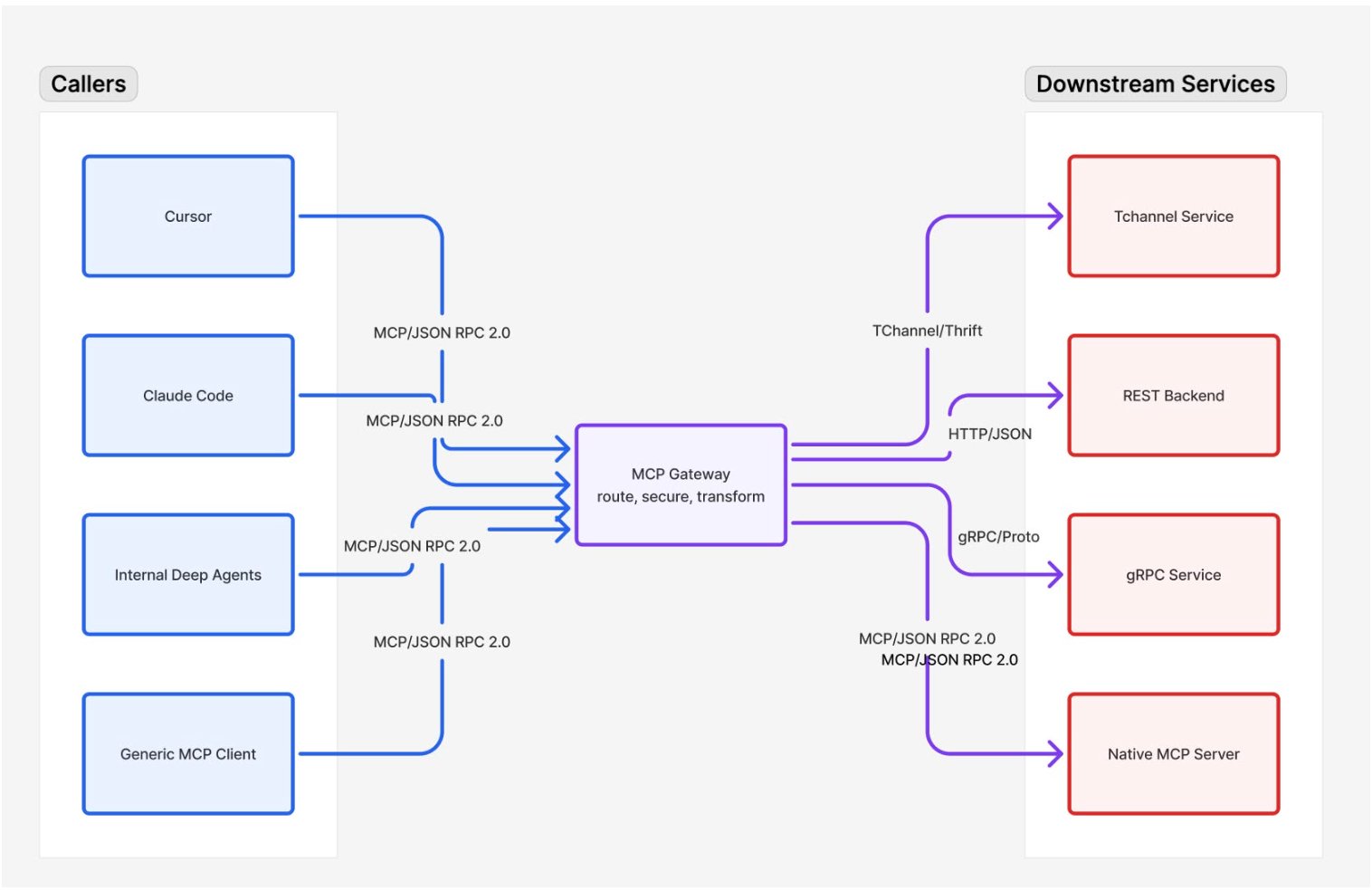
将 API 作为工具的 Uber MCP 网关(来源:Uber 博客文章)Uber MCP Gateway with APIs as tools (Source: Uber Blog Post)
该架构被拿来与成熟的 API 网关模式进行比较。微软 CoreAI 首席软件工程师 Ajay Sharma 在一篇 LinkedIn 帖子中写道,The architecture has drawn comparisons with established API gateway patterns. Ajay Sharma, Principal Software Engineer at Microsoft CoreAI, wrote in a LinkedIn post,
Azure API 网关早就一直在做这件事了。这是为 LLM 带来的混乱建立秩序的一套方案。Azure API Gateways has been doing this for a while now. It's a recipe for order to the chaos that LLMs come with.
Pipe17 总裁 Kelly Goetsch 也在 LinkedIn 帖子中指出,Kelly Goetsch, President at Pipe17, similarly observed in a LinkedIn post that
Uber 的新 MCP 网关看起来与我们几十年来为 API 以及后来为 GraphQL 构建的网关如出一辙。Uber's new MCP gateway looks identical to gateways we've built over the decades for APIs and later GraphQL.
Tamir Dresher 在一篇 LinkedIn 帖文中强调,安全性、服务发现、可观测性和治理等成熟的分布式系统问题至今仍具有重要意义。Tamir Dresher highlighted in a LinkedIn post the continuing relevance of established distributed systems concerns, including security, discovery, observability, and governance.
Uber 的 AutoCrawler 使用 Cadence 自动发现工具。它扫描内部接口定义语言(IDL)注册表,并从 Protocol Buffers 和 Thrift 架构中提取 API 定义。随后,它会生成兼容 MCP 的架构,并利用大型语言模型生成工具描述。新发现的工具会保持禁用状态,直到其所属团队完成审核并明确启用。配置变更会传播到数据平面,无需重启服务或重新部署。Uber’s AutoCrawler automates tool discovery using Cadence. It scans internal interface definition language (IDL) registries and extracts API definitions from Protocol Buffers and Thrift schemas. It then generates MCP-compatible schemas and uses a large language model to produce tool descriptions. Newly discovered tools remain disabled until their owning teams review and explicitly enable them. Configuration changes propagate to the data plane without requiring service restarts or redeployments.
/filters:no_upscale()/news/2026/11/uber-mcp-gateway-ai-agents/en/resources/1Screenshot 2026-10-11 at 3.00.15 PM-1791756099777.png)
自动化爬虫流程(来源:Uber 博客文章)Auto Crawler Flow (Source: Uber Blog Post)
该网关通过 Uber 的内部访问控制系统,在服务器和工具两个层面实施授权。它还支持对工具响应中的个人身份信息(PII)及其他敏感数据进行脱敏。对于 Jira 和 Google 等第三方集成,另有一项独立服务负责将内部用户令牌兑换为相应的第三方身份验证令牌。The gateway enforces authorization at both server and tool levels through Uber’s internal access control system. It also supports redaction of personally identifiable information (PII) and other sensitive data in tool responses. For third-party integrations, including Jira and Google, a separate service exchanges internal user tokens for the corresponding third-party authentication tokens.
随着工具目录不断扩展,将数千个工具的定义加载到智能体的上下文中会变得低效。Uber 开发了 Omni MCP,以支持增量发现,让智能体能够按需搜索服务器、发现相关工具、获取单个工具的架构并调用所选工具。通过响应投影(Response Projection),智能体可以请求特定的响应字段,而不必接收完整负载。Uber 的 aifx 命令行界面还支持编码智能体发现并调用工具,并将结果写入文件,以便有选择地查看。As the tool catalog grows, loading definitions for thousands of tools into an agent’s context becomes inefficient. Uber developed Omni MCP to support incremental discovery, allowing agents to search for servers, discover relevant tools, retrieve individual schemas, and invoke selected tools as needed. Response Projection lets agents request specific response fields instead of receiving complete payloads. Uber’s aifx command-line interface also enables coding agents to discover and invoke tools, writing results to files for selective inspection.